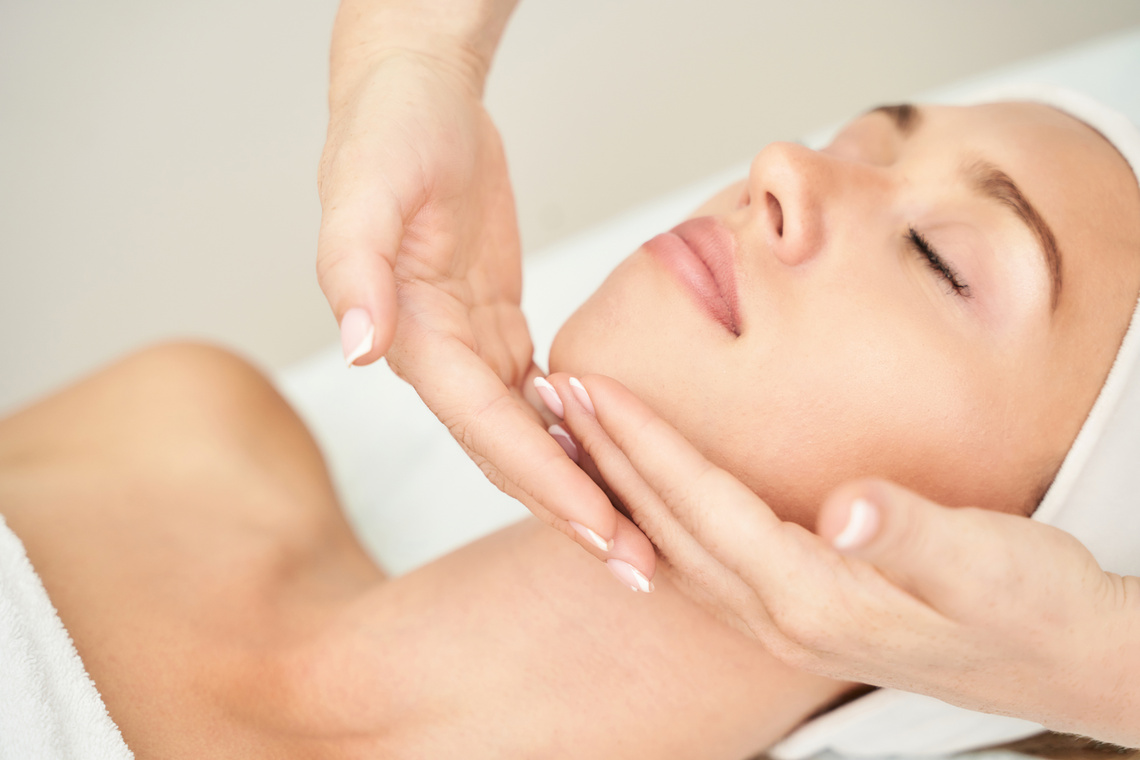

What "holistic" actually means
Holistic simply means treating the whole rather than the part. In practice, a holistic treatment starts from the assumption that how you feel is not confined to the one thing that hurts. Sleep, stress levels, digestion, energy and tension are all connected, and a treatment chosen with the whole picture in mind will often achieve more than one aimed narrowly at a symptom.
That is the difference in philosophy. In the room, it shows up mostly in the consultation: a holistic therapist will ask you more questions, and questions that seem less obviously related to the treatment you booked.
How it differs from a standard massage
A standard massage is usually structural. You arrive with a tight shoulder, the therapist works on the shoulder and the muscles around it, and you leave with a looser shoulder. That is a perfectly good outcome and sometimes exactly what you need.
A holistic treatment is more likely to work with the nervous system than against a knot. The pace tends to be slower, the pressure more even, and the goal is to move you out of a state of alertness rather than to break down a specific area of tension. People often describe the difference as leaving a massage feeling loosened, and leaving a holistic treatment feeling settled.
Neither is superior. They answer different questions, and part of a good consultation is working out which question you are actually asking.
Who tends to benefit most
- Anyone whose stress has become background noise rather than an event, and who has stopped noticing how much tension they are holding.
- People who are sleeping badly, particularly those who struggle to switch off rather than to stay asleep.
- Clients who find deep tissue work too intense but still want something that has a real effect.
- Anyone going through a demanding period, whether that is work, caring responsibilities, illness or simply a relentless few months.
- People who feel they should be able to relax on their own and find that they cannot.
What to expect from a holistic treatment
Expect the consultation to take longer than you might be used to. Your therapist will ask about sleep, energy, stress and anything going on physically, and will use your answers to shape the treatment rather than following a fixed routine.
During the treatment itself, the room will be warm and quiet, and you will be covered apart from the area being worked on. Many people fall asleep. Others find their mind races for the first ten minutes and then drops. Both are normal, and neither means it is not working.
Afterwards, you may feel a little spacey for a while. That is worth planning around: try not to schedule anything demanding immediately afterwards if you can avoid it, and drink more water than usual.
Thai foot massage
Among the holistic treatments we offer is Thai foot massage, which works over the feet and lower legs using pressure along specific points. Clients are frequently surprised by how much of an effect a treatment focused on the feet has on how they feel generally, which is rather the point of a holistic approach.
It suits people who are on their feet all day, anyone who finds full-body massage too exposing, and clients who want something deeply relaxing without undressing.
How often is worth booking
For general wellbeing, many clients settle into something like every four to six weeks. If you are going through a particularly demanding stretch, closer together for a while and then spacing out again tends to work better than waiting until you are completely depleted.
The honest answer is that it depends on you, and a therapist who has seen how you respond is better placed to advise than an article. Ask at your appointment.
Booking a holistic treatment in Hampshire
We offer massage and holistic wellness treatments at our salon in Hamble-le-Rice, near Southampton. If you are not sure whether a holistic treatment or a more conventional massage is the right choice, ring us and describe what has been going on. We will tell you honestly which one we think will help.